I first saw Hallmark Entertainment’s Snow White: The Fairest of Them All (2001) before I was ten years old. It would be a long time before I got to watch it again, so it loomed large in my childhood imagination. Personally, I thought it was better than the 1937 animated Disney movie since it felt more like the kind of fairy tale I got from the Brothers Grimm or Hans Christian Andersen. Being a kid, I appreciated that it was more adult than a Disney fairy tale but wasn’t so dark or adult, like, say, Snow White: A Tale of Terror (1997), that I couldn’t watch it. Indeed, some young children are less likely to be scared by the subtle eeriness of Fairest of Them All than they are by the more melodramatic scariness of the Disney movie. However, now that I’m finally able to rewatch the movie whenever I please as an adult, I must admit that Disney’s Snow White and the Seven Dwarfs is the more consistently great movie. That’s not to say Snow White: The Fairest of Them All is never great though and I’m still more of a fan of how it adapts the original fairy tale.
The story begins with a peasant woman (Vera Farmiga), living out in the woods with only her husband (Tom Irwin, one of the movie’s less well cast actors) for company, wishing for a child with lips as red as blood and skin as white as snow. The woman’s wish is granted but unfortunately, she dies the same night. Her husband has to take his newborn baby to the next village to save her life, but they’re waylaid by a snowstorm. The man’s tears free a spirit (Clancy Brown) from a frozen lake.
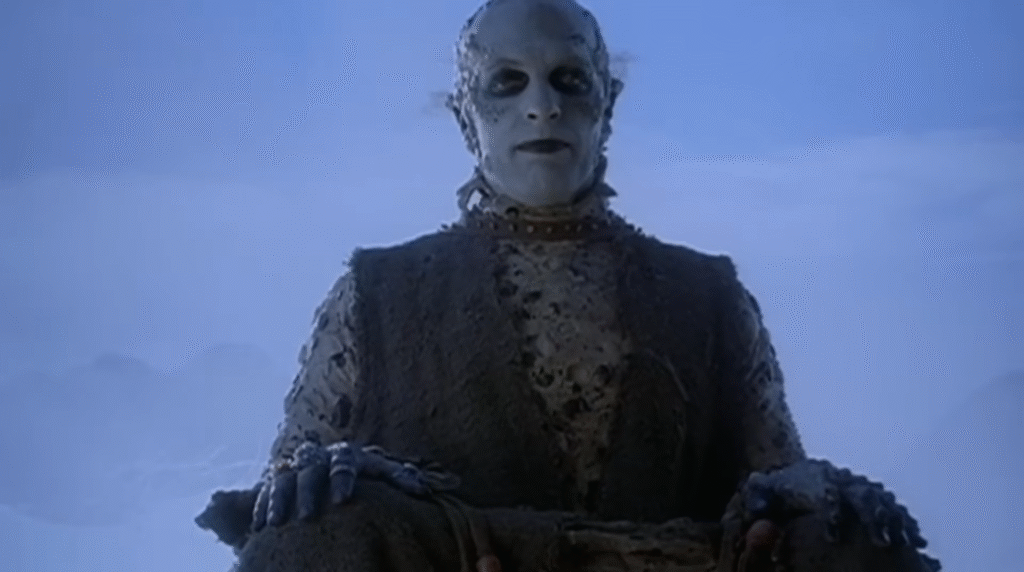
As a reward, it grants him three wishes. The first wish is for milk for Baby Snow White. Then the spirit grants his joking request for a kingdom to rule. It can’t bring his wife back from the dead, but it does bring him another beautiful woman (Miranda Richardson)[1]Who played a similar character on an episode of Jim Henson’s The Storyteller. to be his queen.
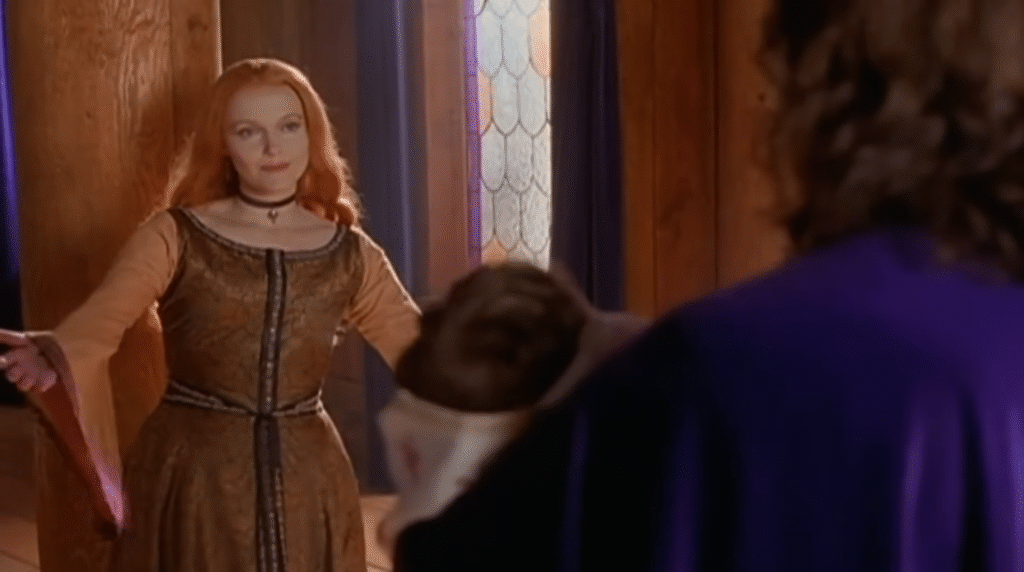
What the spirit doesn’t tell the newmade king is that this woman is actually his sister who used to be an ugly witch until he gave her a magical mirror.[2]It seems to be relatively common for modern Snow White reimaginings have the evil queen start off as plain or even ugly and use magic to make herself more beautiful. cf. Mirrored by Alex Flinn and … Continue reading She uses shards of the mirror to enchant the king’s eyes and heart.[3]A hint of The Snow Queen. As a result, Snow White (Kristin Kreuk) grows up such a neglected, lonely child that she talks to the lawn gnomes, never guessing they’re really…. well, I’ve explained enough to give you an idea of how the script by frequent Tim Burton collaborators, Caroline Thompson (who also directs) and Julie Hickson embellishes the story.
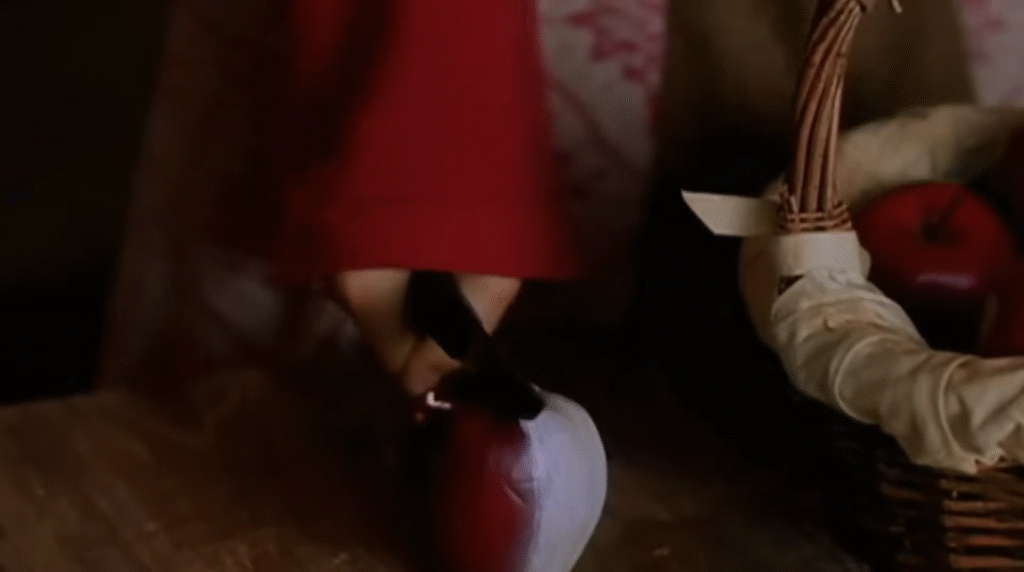
Most Snow White adaptations even if they claim to be based on the tale as told by Jakob and Wilhelm Grimm are really based more on the Disney movie. I appreciate that that’s less true of this one than most. Two of the seven dwarfs’ personalities might be homages to Grumpy and Dopey but it’s subtle enough that it might be a coincidence. And if it’s not a coincidence, who cares? The movie includes the disturbing detail of the evil queen eating what she believes to be Snow White’s heart[4]Well, actually, it was her lungs and liver in Grimm. I don’t know if the Disney movie was the first to have the queen request her heart or if some other translation or adaptation did that first. and makes it more disturbing by having her almost trick Snow White’s father into eating it too.[5]Something borrowed from another Grimm tale, The Juniper Tree, as well as several classical myths. It doesn’t include the incident of the poisoned comb, but it does include Snow White being almost choked to death and the dwarfs saving her. This is the only Snow White movie to my knowledge that keeps the detail of the queen only poisoning half the famous apple and eating the safe half herself to win Snow White’s confidence.[6]Though the 2012 movie, Mirror Mirror, does have a little allusion to this in its last scene.
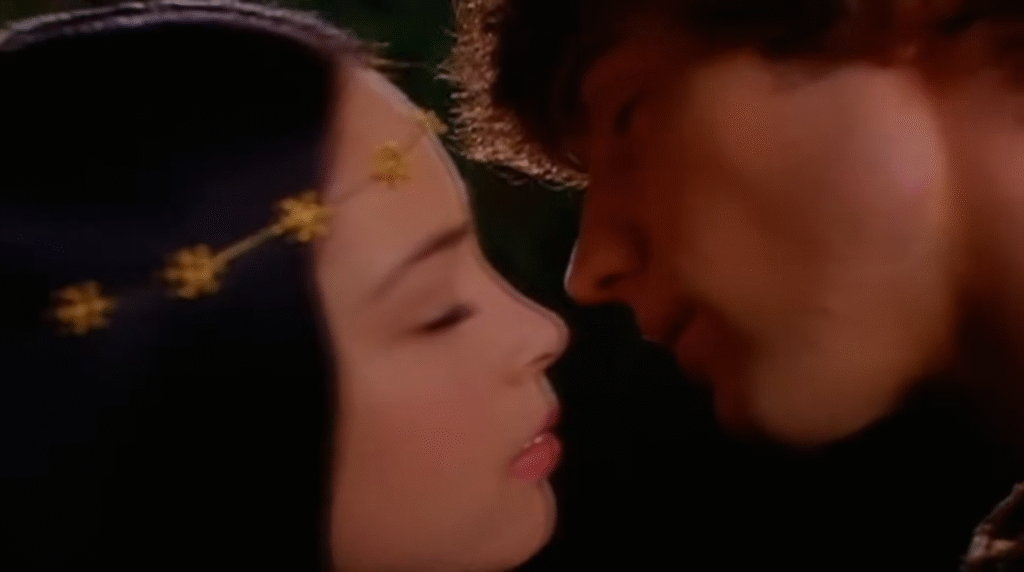
Some of the changes to the source material this adaptation has in common with the Disney one are more due to practicality than a lack of imagination, mainly having Snow White meet the prince (Tyron Leitso) long before the climax. He sort of awakens her with a kiss at the end, as has become the norm for retellings despite it not being that way in Grimm, though it’s not clear if that’s what breaks the spell upon her. (I don’t want to spoil more I’ve already spoiled.)
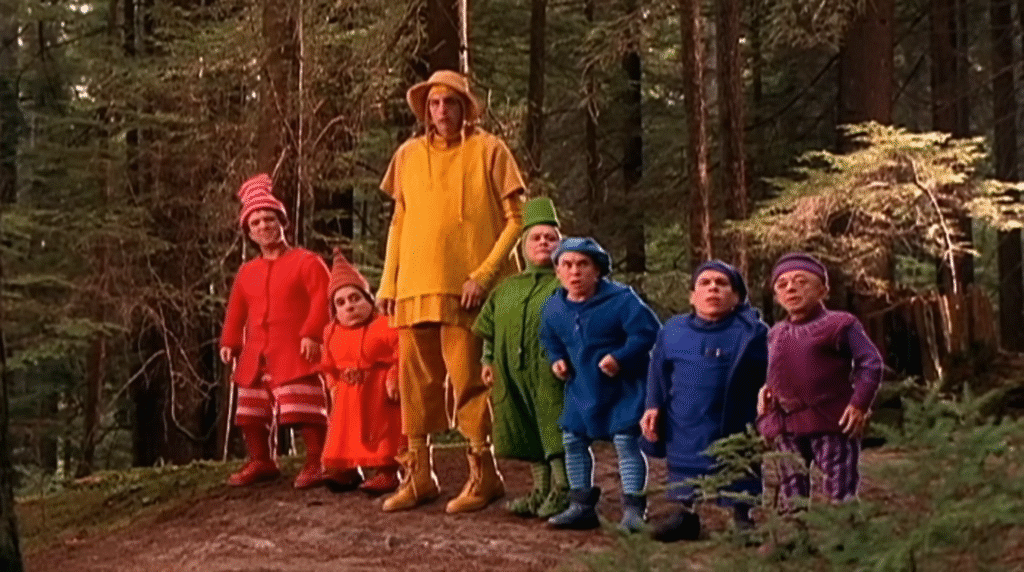
The seven dwarfs are portrayed here as nature/weather spirits. (Instead of putting Snow White’s comatose body in a glass coffin, they freeze it in a block of ice.) Each of them wears one of the colors of the rainbow and when they stand side by side in the correct order, they can travel across the sky in the shape of one. This looks rather cheesy, but I like how it plays into the plot. And I enjoy how their names and personalities are modeled after the nursery rhyme:
Monday’s child (Michael Gilden) is fair of face
Tuesday’s child (Mark J. Trombino) is full of grace
Wednesday’s child (Vincent Schiavelli) is full of woe[7]He’s the one who might be a stand in for Grumpy.
Thursday’s child (Penny Blake) has far to go[8]Dopey.
Friday’s child (Martin Klebba)[9]Who would go on to play a dwarf in two unrelated Snow White movies. is loving and giving
Saturday’s child (Warwick Davis) works hard for a living
But the child that is born on the Sabbath day (Michael J. Anderson)
Is fair and wise and good and gay.
As far as comic relief goes, these dwarfs may not be as hilarious as the Disney ones, but that kind of broad, cartoony humor wouldn’t have fit with this movie’s tone. The dwarfs do have some fun moments and a few good serious ones too, mainly the scene of them mourning over the seemingly dead Snow White.
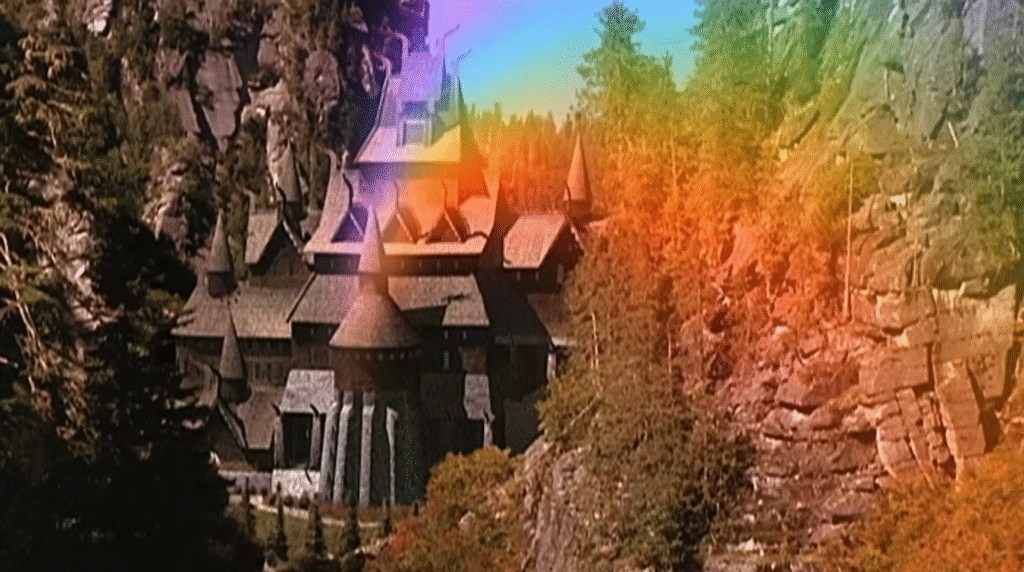
I described their rainbow as looking cheesy. While this movie naturally has the effects of a made-for-TV movie from the early 2000s, that being what it is, I think the visuals generally hold up well. I’ve mentioned on this blog before that I feel like the CGI in popcorn movies these days actually looks less convincing than it did years ago.[10]From what I hear this is because the CGI people are so overworked. So Snow White: The Fairest of Them All actually strikes me as no harder on the eyes than Snow White (2025.) The film’s locations and its production design (courtesy of David Brisbin) are lovely.
I wish the costumes by Nancy Bryant looked more lived-in, but their designs are great. Michael Convertino’s soundtrack is beautiful too.[11]He also scored Faerie Tale Theatre‘s excellent Aladdin episode. Even in intense or dramatic scenes, it tends to sound quite pleasant and peaceful. Some may find that a distraction and it’s not what I would have done if I’d been the movie’s director. But to me, it fits in with the film’s odd, dreamlike atmosphere.
Interestingly, this version of Snow White implies that the verdicts of the magic mirror may not be as objective as the queen thinks. At a party one night, the queen is disconcerted to find that however she tries to attract the attention of the handsome visiting prince, he’s more interested in her stepdaughter.[12]This is arguably reminiscent of the beginning of The Blue Bird, a lesser-known French fairy tale. She retires to her apartment and nervously asks the mirror who is the fairest woman of all. It replies that it’s Snow White although the answer was the queen herself merely one night ago when she was confident. So, either Snow White grew significantly more beautiful in just one day or the mirror is reflecting the queen’s own thoughts. “She was no threat until you imagined her to be one,” someone tells her later in the movie. It’s an interesting interpretation though the fact that the mirror is able to tell the queen Snow White is alive when she believes her to be dead muddies it. The beautiful queen’s disguise as an ugly old hag in the Disney movie is unforgettable and I don’t have a problem with it. After all, it makes sense that a character with such a high opinion of her own looks would think an ugly person the best disguise. But I’m fond of Fairest of Them All‘s more subtly unnerving version where she disguises herself as the mother Snow White can’t remember.
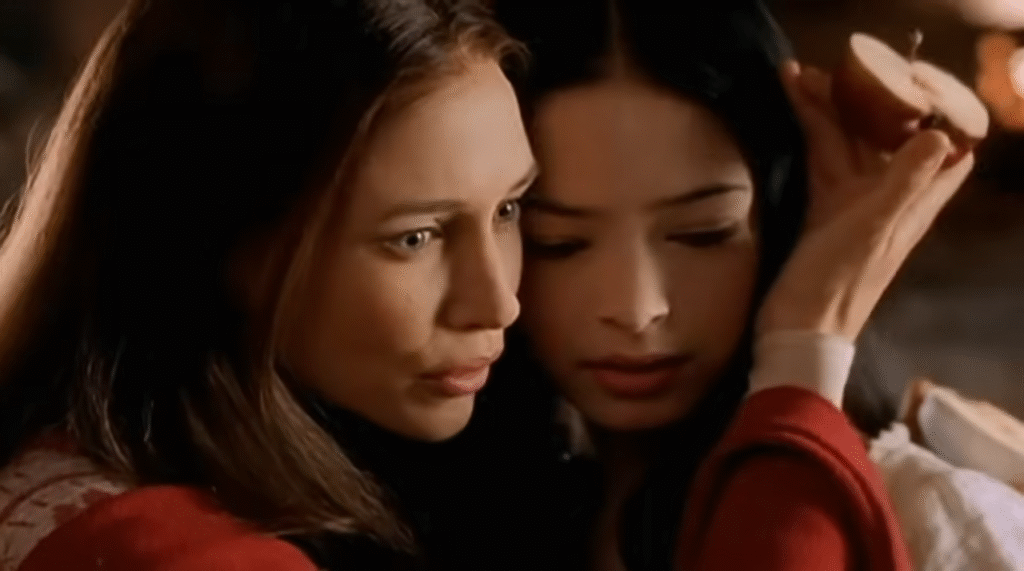
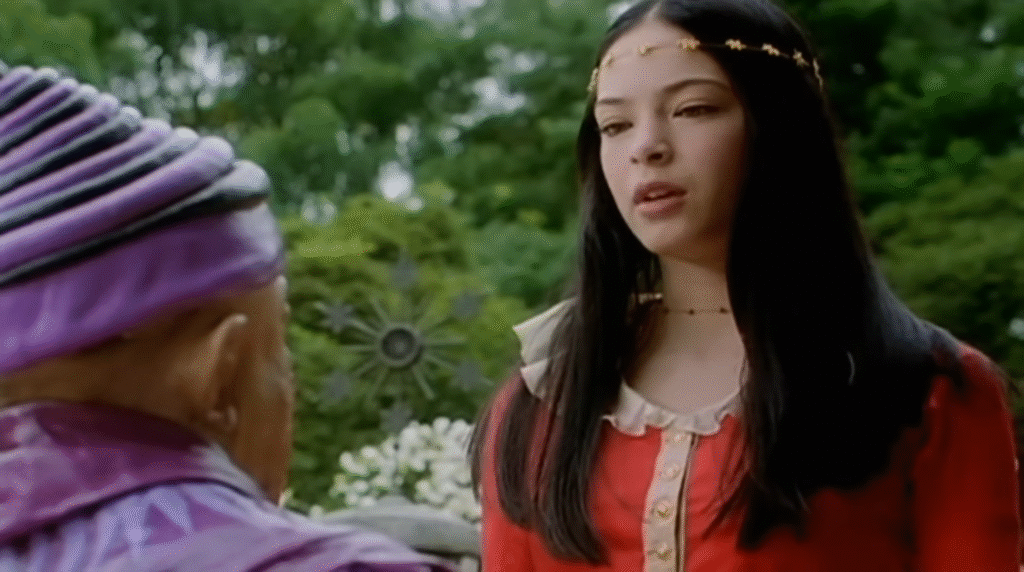
Some have criticized Kristin Kreuk for being bland in the title role, but I really like her. To me, she brings a regal dignity to the character which is much closer to how I imagine Snow White than the chirpy Disney heroine.[13]That could apply to either the 1937 movie or the 2025 one. The makeup team, doubtless helped by the actress’s natural good looks, do a great job making her beautiful in an otherworldly way. Her pleasant speaking voice is a big asset too. I really do feel like my natural instinct would be to bow if ever I met this Snow White in person.
It does seem though that the movie wants to give her a character arc which it doesn’t really succeed in conveying. According to the director, this story is supposed to be about two women who are about to enter a new stage in life and are afraid of getting older. It’s clear how this applies to the character of the queen but not so much Snow White. She seems a bit frightened by the prospect of a romantic relationship with the prince and gets an early line about not wanting to grow up but it’s not clear what she means by that or why. What is clear is that the temptation of the poisoned apple, offered here by an enemy disguised as a loving mother, becomes the temptation to stay a little girl forever. After she awakens, she’s perfectly happy to ride off with the prince. I guess she’s learned that it’s dangerous to try to stay a child forever and is now ready for an adult relationship or…something like that? It’s all quite surreal but, to be fair, Grimms’ fairy tales typically are that way. Of the A-list fairy tale protagonists, Snow White is probably the one who fits our modern expectations of a protagonist the least since she’s the one who’s most thoroughly a victim.[14]As Walt Disney once pointed out, Cinderella didn’t just wait for her prince to come. She went to the ball and got him. That’s true of Fairest of Them All‘s version too[15]The script gives her noble intentions, but the plot seldom allows her to act on them. and you know what? I’m fine with it. I read and watch stories from so many different time periods; it really doesn’t matter to me whether they live up to modern society’s dramatic expectations. Why pretend something bugs me just because society says it should bug me? I just mention that the movie doesn’t quite succeed in giving Snow White a character arc in my opinion because, objectively speaking, failing in what you attempt is a flaw though, subjectively speaking, it doesn’t bother me.
If there’s something about the script that does bother me it’s the shallowness of the romance between Snow White and the prince. As I mentioned, the two of them meet early in the story and the prince gets more screentime than in the old Disney movie but he spends most of it separated from Snow White. Early on, she rebuffs his advances somewhat angrily, saying that all he knows about her is that she’s beautiful which doesn’t tell him anything about her character. He argues that the two of them do know each other in their hearts or something like that. I guess that line of reasoning works because when we next see them, they’re about to smooch. As I wrote in my last blog post, I think there’s something to be said for just using the love-at-first-sight trope rather than having fictional lovers start out hating each other and giving them a manufactured conflict to overcome. But why bring up the fact that they haven’t had time to really get to know each other if that’s not going to have changed by the end of the movie? Maybe if the actors had better chemistry between them, it would work.
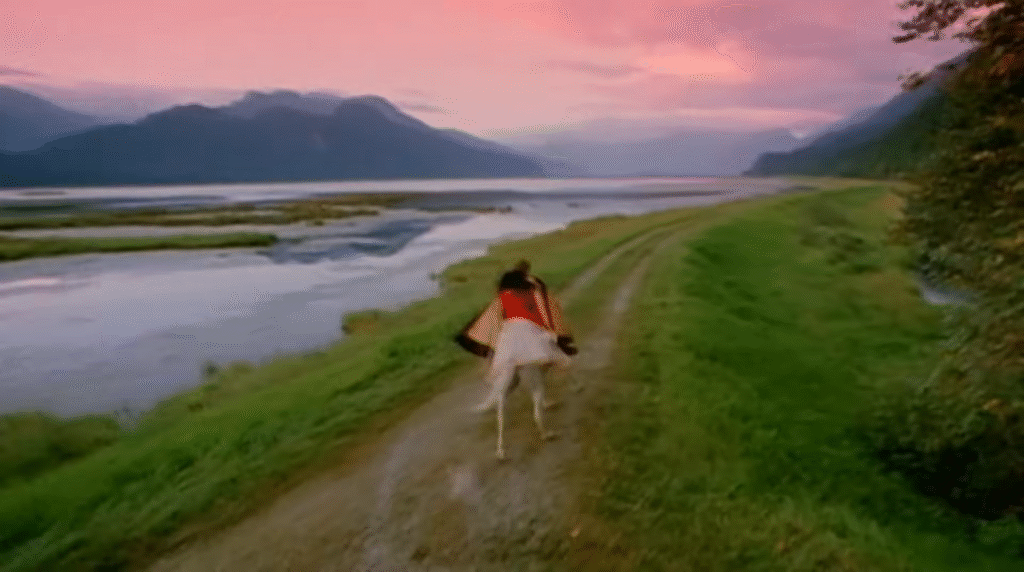
Let’s get back to positives. The queen’s ultimate fate tends to vary in different versions. In Grimm, she’s forced to wear red-hot iron shoes at Snow White’s wedding and dance to death. Often translations or retellings for children will tone this down by simply giving the queen a heart attack upon learning that Snow White is alive yet again and married to a prince. In Disney, she tumbles off a cliff, gets crushed by a boulder and has her remains eaten by vultures, which is less dark in that it’s quicker and isn’t directly inflicted on her by the heroes but scarcely less gruesome. A beautiful picture book written by Josephine Poole and illustrated by Angela Barrett has the queen bring a poisonous flower to the wedding to place under the bride’s pillow. When she sees that it’s Snow White, she angrily crumples it in her hand, accidentally(?) killing herself. I’m fond of the ending of the Faerie Tale Theatre episode where she’s cursed to never be able to see her own reflection and goes mad from the horror of it. But the queen’s comeuppance in this movie, which I’m not going to spoil, is the one I find most satisfying.
Of course, talking about spoiling Snow White: The Fairest of Them All presumes that other people would like it, something I can’t guarantee. There are people out there who’d find it too dark and strange and others who’d feel like it’s not dark or twisted enough for their tastes. But for me, this particular fairy tale film really hits that sweet spot and if I were to adapt a classic fairy tale into a movie myself, this would be one of my main models.
References
| ↑1 | Who played a similar character on an episode of Jim Henson’s The Storyteller. |
|---|---|
| ↑2 | It seems to be relatively common for modern Snow White reimaginings have the evil queen start off as plain or even ugly and use magic to make herself more beautiful. cf. Mirrored by Alex Flinn and Fairest by Gail Carson Levine |
| ↑3 | A hint of The Snow Queen. |
| ↑4 | Well, actually, it was her lungs and liver in Grimm. I don’t know if the Disney movie was the first to have the queen request her heart or if some other translation or adaptation did that first. |
| ↑5 | Something borrowed from another Grimm tale, The Juniper Tree, as well as several classical myths. |
| ↑6 | Though the 2012 movie, Mirror Mirror, does have a little allusion to this in its last scene. |
| ↑7 | He’s the one who might be a stand in for Grumpy. |
| ↑8 | Dopey. |
| ↑9 | Who would go on to play a dwarf in two unrelated Snow White movies. |
| ↑10 | From what I hear this is because the CGI people are so overworked. |
| ↑11 | He also scored Faerie Tale Theatre‘s excellent Aladdin episode. |
| ↑12 | This is arguably reminiscent of the beginning of The Blue Bird, a lesser-known French fairy tale. |
| ↑13 | That could apply to either the 1937 movie or the 2025 one. |
| ↑14 | As Walt Disney once pointed out, Cinderella didn’t just wait for her prince to come. She went to the ball and got him. |
| ↑15 | The script gives her noble intentions, but the plot seldom allows her to act on them. |