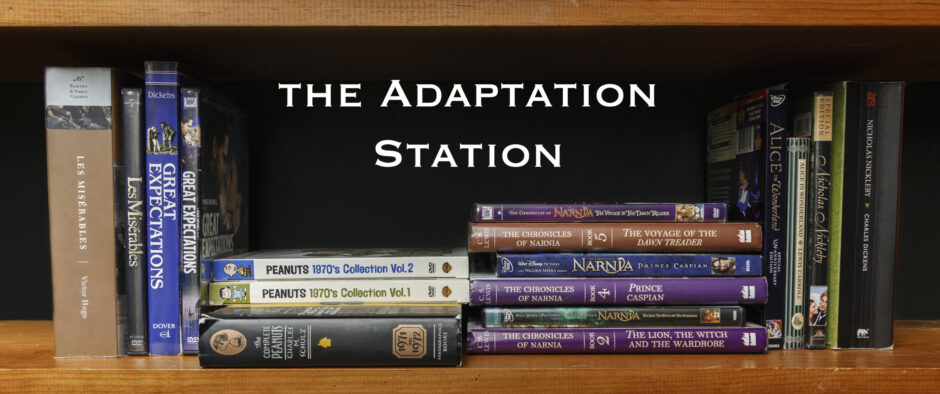
Waste not, want not, I suppose. Scott Cramer, a YouTuber whom I like[1]Partially because we’re both North Dakotans., once did a video about ideas he had for YouTube videos which he ultimately never made for various reasons. This allowed him to make use of some of the best lines he would have used in those videos and give fans an interesting look at the behind-the-scenes process. I thought it’d be fun to do a blog post like that, so here are some concepts for blog posts that I’ve reluctantly rejected-well, rejected so far anyway. There’s no reason I couldn’t still take one and make a blog post out of it. If my readers are particularly intrigued by any, they should tell me and maybe-just maybe-I’ll expand on them.
Without further ado, here in no particular order are The Adaptation Station.com’s posts that weren’t.
The Best Guilty Pleasures About Which I’ve Blogged
You may have noticed I like to make lists looking back on movies, miniseries, etc. that I’ve done over the years. I thought it would be fun to do a lookback list of a very specific kind of movie: the guilty pleasure. Different people have different definitions of that but mine is a piece of entertainment which I’d have to say is more bad than good if I were to neutrally add up all its strengths and weaknesses but which I also happen to really enjoy even if I have a difficult time justifying the extent of that enjoyment. This is distinct from a piece of entertainment that’s a mixed bag in that there’s an element of embarrassment in my pleasure and it’s distinct from the so-bad-it’s-good pleasure in that there are things about guilty pleasures that I honestly believe are high quality. It’s just that the low-quality aspects should be bad enough in theory to keep me from revisiting those pleasures as often as I do. The concept may sound confusing, but I think a lot of people have “favorites” like this. I can think of three adaptations about which I’ve blogged that fit the criteria. In alphabetical order, those adaptations are Disney’s A Christmas Carol (2009), Rodgers and Hammerstein’s Cinderella (1997) and Peter Pan (2003.)
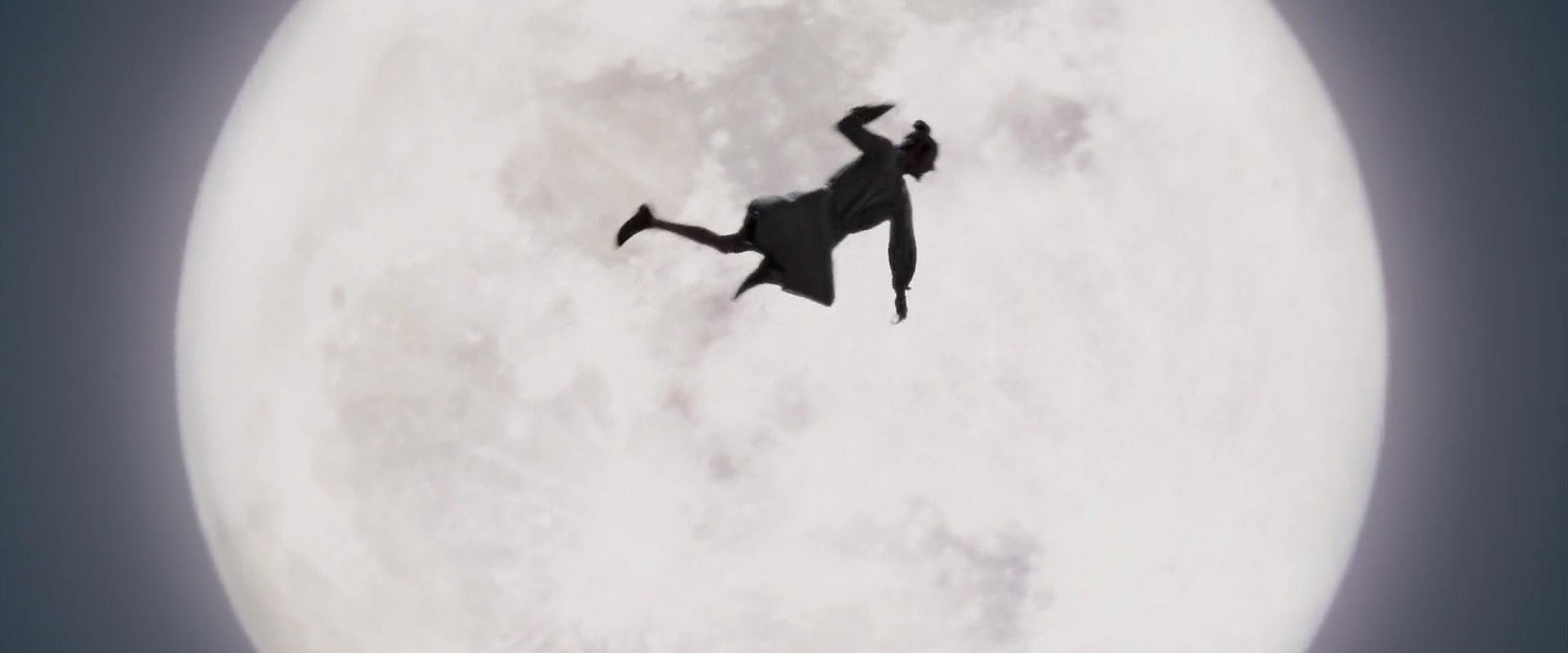
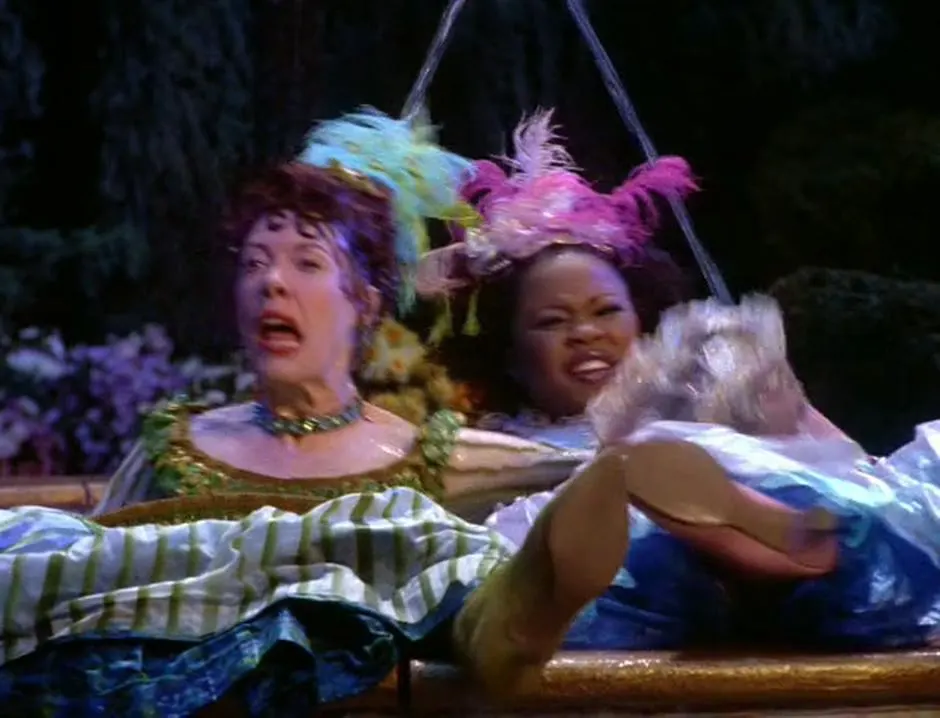
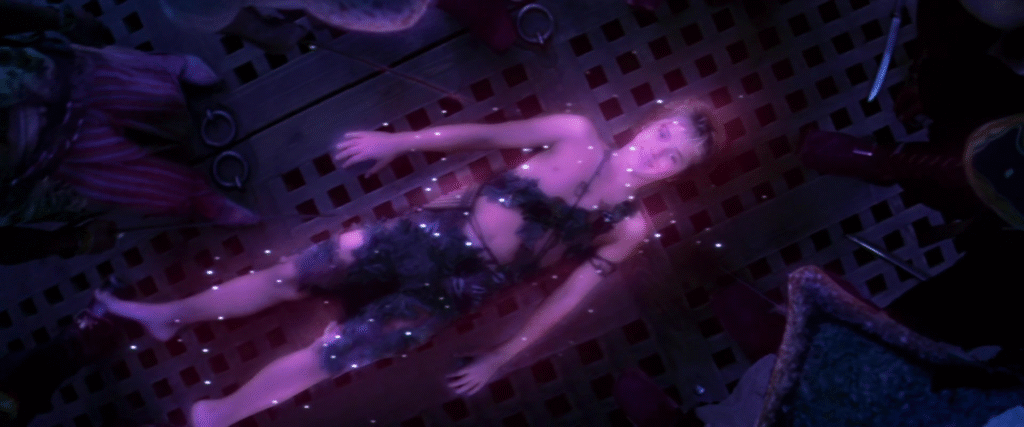
Ranking them for a Best Guilty Pleasures list gets difficult though. By a better guilty pleasure do I mean something that gives me more pleasure or more guilt? And what about other, less clear, guilty pleasures The Adaptation Station.com has covered? A big part of me feels I shouldn’t like Prince Caspian (2008) as much as I do considering the major changes it makes to the original story and characters. But there are very few scenes or lines in it that I find silly as I do scenes and lines in the aforementioned GPs. My guilt is more academic and theoretical with that one. Much the same could be said of Into the Woods (2014) though I’m less of a fan of the original stage play than I am of the Narnia books, so both my guilt and my pleasure are less intense. And what about things that are sort of the opposite of guilty pleasures, movies like Return to Oz that I feel I should enjoy much more than I actually do? Should they be included on the list or should they get their own post? What ultimately dissuaded me from a blog post about The Adaptation Station’s top guilty pleasures though was that I believe my original posts about the three adaptations that I’m confident would make the list already do a good job explaining why they’re guilty pleasures for me. To write more would just be repetitive.[2]Indeed, this blog has returned to the 2003 Peter Pan far more often than it has to either the more consistently faithful 1924 one or the more consistently entertaining 2000 one. I guess that’s … Continue reading
Alice in Wonderland (1999)
You know, I’ve blogged about all the adaptations in my blog’s header image except for Alice in Wonderland (1951.) I’ve loved that movie ever since I saw it as a kid, but I don’t have any ideas for blog posts about it. If I were to do a post about an adaptation of Lewis Carroll’s Alice books, it would be about Hallmark Entertainment’s star-studded 1999 TV movie directed by Nick Willing, which I also saw and loved as a kid. In fact, I preferred it to the 1951 movie since it included more from the books.[3]Though a downside of that is that the 1999 movie threatens to drag. In general, I really like Hallmark Entertainment’s adaptations of classic fantasies from the 90s and early 2000s (cf. Gulliver’s Travels. The Odyssey. A Christmas Carol. Arabian Nights. Snow White: The Fairest of Them All.) and I wish more adaptations nowadays would strive to be like them. To my mind, Alice in Wonderland might be their masterpiece. It’s full of fun performances and has a superbly witty script by playwright Peter Barnes. (“Last time, the whole audience hissed. Hissed! All except one man who was applauding the hissing.”) You wouldn’t necessarily think of this as being an asset to an Alice in Wonderland adaptation, but it also has an absolutely beautiful musical score courtesy of Richard Hartley.[4]He also did the soundtrack for the 2012 Great Expectations by the way. The White Knight (Christopher Lloyd)’s farewell to Alice (Tina Majorino) is oddly moving, largely because of that music.
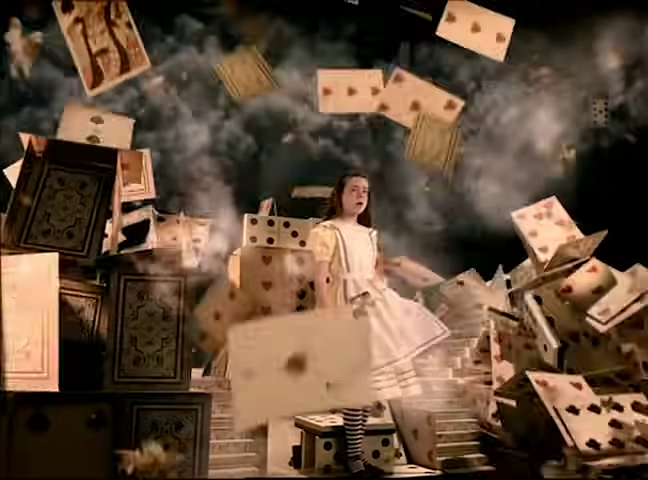
Actually, the reason I’m not doing a blog post about the movie (unless someone insists) is that I love it so much. Except for a few small criticisms, I fear it would be one of those posts where I’m like, “this is great. That’s great. Those are great too.” Sometimes I’ll do a rave review on this blog or alternatively a post just ripping an adaptation I hate to shred but while those can be fun to write, the blog posts I think are most interesting to read tend to be about mixed bags or guilty pleasures. The most interesting part of my hypothetical post about the 1999 Alice in Wonderland would be the part comparing it to the 1985 miniseries and the 2010 movie, the latter of which acts as a fanfiction-y sequel of sorts to the Alice books. All three give Alice a character arc in which her adventures teach her to be more courageous.[5]The parallels between the 1999 and 2010 movies are particularly striking. At the beginning of both, Alice is being pressured into doing something at a garden party against her will for the sake of … Continue reading I’d argue that the fact that the original stories didn’t have any such message was something that made them stand out from other Victorian children’s books. To give them a point is to miss the point, so to speak. What’s more, I never got the impression from the books that Alice was someone who suffered from timidity. She usually tried to be polite but when confronted with something that really offended her sensibilities, such as crockery being thrown at babies or sentences before verdicts or books without pictures, she never hesitated to speak out against them. However, I love how the added character arc ultimately plays out in the 1999 movie. It strikes me as much truer to what makes the original Alice a cool character than the climaxes of the 1985 and 2010 adaptations.
Adaptations of J. M. Barrie’s Works Besides Peter Pan
Despite writing about so many adaptations of famous stories on this blog, I really do like to draw attention to great pieces of art with which people generally aren’t familiar. The only famous thing playwright J. M. Barrie created is Peter Pan-or, at least, that’s the only thing he created that’s famous nowadays and I’d argue his other works deserve better. I’ve thought about doing a blog post about movie adaptations of his other plays. The problem is I haven’t really found that many movie adaptations of those other plays. There’s The Little Minister (1934), an impossible romance between a straightlaced minister (John Beal) and a wild gypsy girl (Katharine Hepburn)-or so she seems to be-set against the backdrop of the labor disputes in 1840s Scotland. The thing about The Little Minister though is that Barrie wrote both a novel version and a play version and I’d want to be familiar with both before I wrote a blog post about it. Unlike Peter Pan however, I haven’t been able to get into the novel version of The Little Minister. I probably could get through it with an effort but there are so many other books I’d like to read now instead. Any Little Minister post will be a long time coming. There are also adaptations of Barrie’s romantic comedies, Quality Street (1937), also starring Hepburn, and What Every Woman Knows (1934) starring Helen Hayes. All I have to say about those movies is that they’re good but not as great as the original plays deserve.
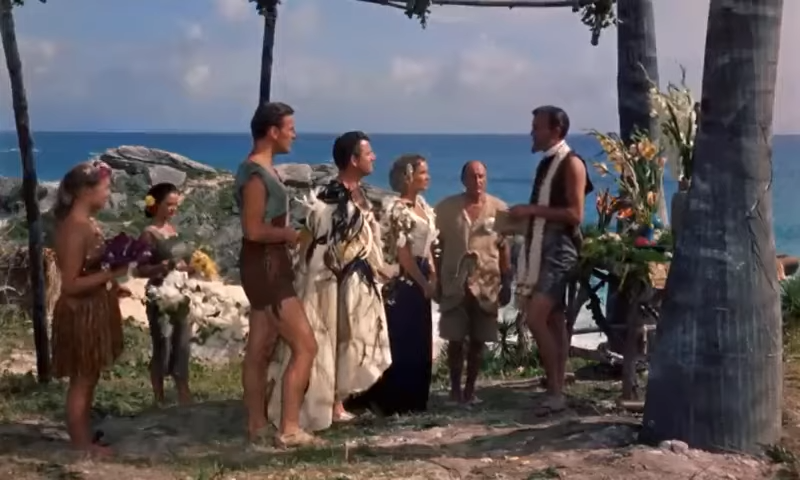
The non-Peter Pan Barrie adaptation out of which I’d probably be able to spin the longest blog post is The Admirable Crichton (1957), the story of Lord Loam (Cecil Parker), an English peer of the realm with egalitarian ideals, and Crichton (Kenneth More), his butler who firmly believes in social hierarchies. While Lord Loam enjoys shocking people with his radical beliefs, he really loves being in charge too much to honestly like the concept of equality. And while Crichton believes that hierarchies are inevitable, he doesn’t believe that the specific hierarchy they have in England is the only possible one. Everyone’s ideological commitments are challenged when Lord Loam, his three daughters (Sally Ann Howes, Mercy Haystead and Miranda Connell), two of their boyfriends (Jack Watling and Gerald Harper), Crichton and another servant (Diane Cilento) are shipwrecked on an uncharted island and have to create their own civilization. The movie’s casting is great, but the writing isn’t particularly. Very little of Barrie’s dialogue is used and the script is not the better for it. While most of the story is the same as in the play, what changes there are make the comedy less funny and the story less effective. The only alteration I really like is giving Cilento’s character a happier ending than the play does-and I even have reservations about that since it also means giving Crichton a happier ending. Still, I don’t hate the movie or anything. It’s just that if I blogged about it, it’d be one of those posts that are really excuses for me to write about the original, not the adaptation.
Three Hans Christian Andersen Movies
Did you know there have been at least three movies that tell stories about Hans Christian Andersen-or a fictionalized version of him anyway-interspersed with retellings of some of his stories? To paraphrase Dr. Doofenshmirtz, that’s not a lot but it’s weird that it’s happened more than once. In the 1952 musical starring Danny Kaye, Andersen is an eccentric cobbler who is kicked out of Odense because the stories he tells distract the children from their schoolwork.[6]While the real Andersen was a cobbler-or, more accurately, the son of a cobbler-from Odense, he didn’t get along well with children and was very offended by the design for a statue of himself … Continue reading He goes to Copenhagen where he gets a job making ballet slippers for a ballerina (Zizi Jeanmarie) and eventually gets a publishing deal for his stories. Those stories are told in songs by Frank Loesser. In The Daydreamer (1966), one of a handful of theatrically released movies made by Rankin/Bass productions, a young Hans Christian Andersen (Paul O’ Keefe)-or Chris as he’s called-goes on a search for the Garden of Paradise e.g. Eden. The Sandman (voiced by Cyril Ritchard)[7]Or Ole Lukoie as he’s called in Danish. Maria Tatar’s English translation of Andersen dubs him Ole Shuteye. sends him dreams, depicted in stop motion animation, that show him he’s no less susceptible to temptation than Adam and Eve were and that give him the inspiration for the stories he will write. Hallmark Entertainment’s Hans Christian Andersen: My Life as a Fairy Tale (2003) is the only one of these movies[8]OK, technically, it’s a three-hour miniseries but on DVD, it plays like a three-hour movie. to be a straight biopic of Andersen though, after the fashion of films that are “based on a true story,” it definitely shouldn’t be used as a legitimate source. His stories are depicted in fantasy sequences with Andersen (Kieran Bew) and the people in his life cast as the characters.[9]I’m cynical about the way author biopics always depict their subjects’ famous work as directly inspired by their life experiences. Don’t they think authors ever use their … Continue reading
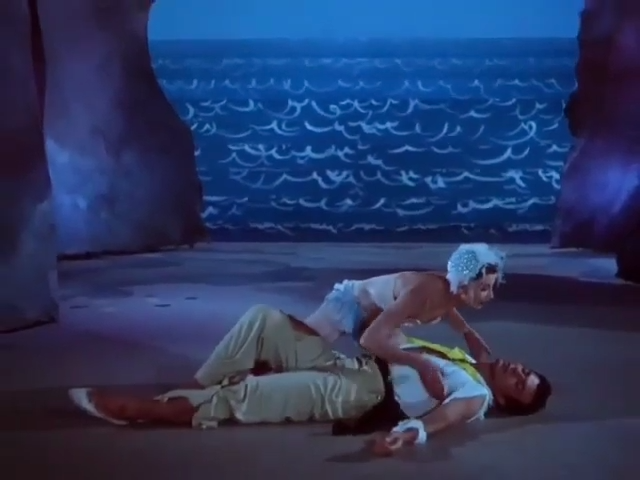
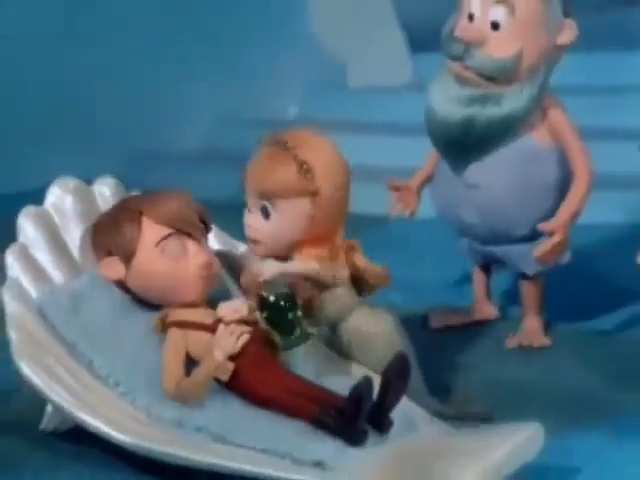
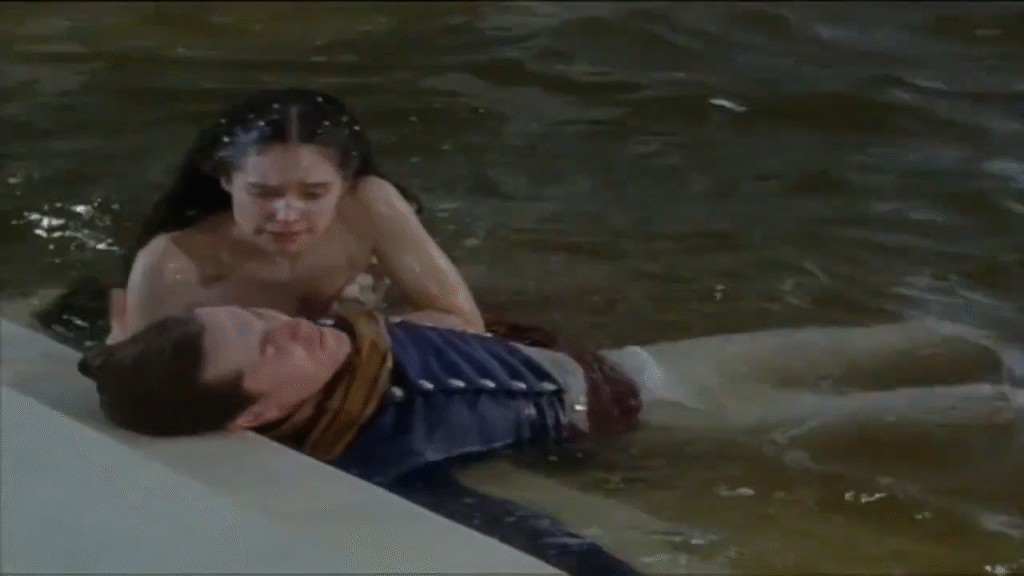
I thought it’d be interesting to compare and contrast these three movies but on reflection, apart from their basic premise, I feel like they don’t have enough in common for that. Sure, they feature a number of the same fairy tales but the only one to get an equal amount of attention in all three is The Little Mermaid. If there’s anything else they all have in common, it’s that while they don’t include Andersen’s least likeable traits[10]This is even true of the semi-accurate My Life as a Fairy Tale., none of them portray him as perfect either. The characters whose place he takes in The Daydreamer and Hans Christian Andersen: My Life as a Fairy Tale tend to be, well, not negative ones per se but ones who unintentionally hurt others like the prince in The Little Mermaid or Kai in The Snow Queen. The 1952 Hans Christian Andersen and My Life as a Fairy Tale each have a scene where another character accuses him of confusing stories with real life. I’m not sure what the overall thesis of a blog post about the films would be besides that Hans Christian Andersen: My Life is a Fairy Tale is the best of them by a long shot. I don’t say that because it takes more from the author’s real life than the other two by the way. I don’t really care much about historical accuracy. It’s just that My Life as a Fairy Tale is a wonderful movie and Hans Christian Andersen and The Daydreamer are simply average.
My Favorite Novels Based on Greek/Roman Mythology
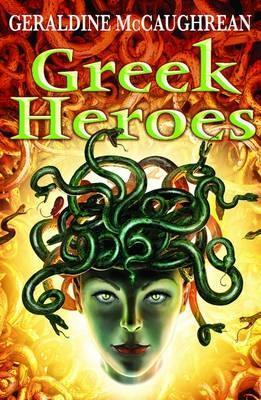

I can think of at least three books adapted from Classical myths that I love. The first, Greek Heroes by Geraldine McCaughrean, is actually a compilation of four children’s novellas, each about a famous mythic adventurer. Those adventurers are Perseus, Hercules[11]Yeah, he’s called by his Roman name while everyone else is called by their Greek name. Deal with it., Theseus and Odysseus.[12]Part of me wishes McCaughrean had also done one about Jason-which in itself is a tribute to the series’ quality since only a few incidents in his story really capture my imagination. For more mature readers, I’d recommend a pair of novels by Leon Garfield and Edward Blishen, The God Beneath the Sea and The Golden Shadow.[13]Garfield and Blishen saw themselves as writing for young readers but I’d automatically consider them for young adults at least since while they don’t get graphic whenever sexual assault … Continue reading The first is more about the gods and covers such famous myths as those of Pandora, Persephone and Sisyphus. The second is more about mortals and demigods. It mainly follows the life of Heracles, but it also tells the stories of his brother-in-law, Meleager, and Atalanta since you can’t get into Meleager’s story without getting into Atalanta’s. Last but not least, I’d heartily recommend Till We Have Faces: A Myth Retold by C. S. Lewis, which reimagines the Roman myth of Cupid and Psyche[14]Well, truth be told, it’s more of a fairy tale than a myth but who cares? from the perspective of Psyche’s antagonistic sister, here named Orual. Longtime readers may remember I’m skeptical about reimaginings of famous villains that make them misunderstood, but the idea was more original when Lewis used it and Till We Have Faces is so great it transcends the trope.


Part of the reason I’m holding off on this idea is that I’m not sure if Greek Heroes really deserves to be ranked beside the other three books. While its prose is certainly lush and engaging, it can’t compete with the utter beauty of The God Beneath the Sea, The Golden Shadow or Till We Have Faces.[15]In general, I consider Leon Garfield one of the best prose writers ever. Yet it’s endeared itself to me more than some other novels based on mythology that are more adult or more interestingly written. If nothing else, it deserves credit for how many little details from ancient sources it includes, such as blood dripping from Medusa’s head planting snakes in the desert or Theseus being mistaken for a girl when he first arrives in Athens. Clearly, Geraldine McCaughrean did her research. Another thing that holds me back from making this idea into a real blog post is that I’m not sure if adapting one form of literature (ancient myths) into another form of literature (modern novels) is as interesting as adapting literature into movies, plays, etc. I have blogged about remade movies though so there’s that precedent. However, since so much of my love for these books is due to their succulent prose I fear the blog post would end up being mainly a series of quotations. Is that what anyone wants to read? On a more hopeful note, there is actually a major parallel between The Golden Shadow and Till We Have Faces. (Major spoilers!) Both the character of the old storyteller in the former and Orual in the latter are desperate to find evidence of the divine but their skeptical minds, in The Golden Shadow‘s words, “would helplessly destroy it even as (they) found it.” Later, the storyteller comes to see his life as random and meaningless and Orual comes to see the gods as her sadistic tormenters but from the larger perspective the readers are granted, they can see that their lives are actually part of a divine plan. And while the divine plan in The Golden Shadow may not be as consistently benevolent as the one in Till We Have Faces, neither is it completely lacking in benevolence. Like most of Leon Garfield’s work, his adaptations of mythology get very dark but are ultimately uplifting.
The Reluctant Dragon (1941)
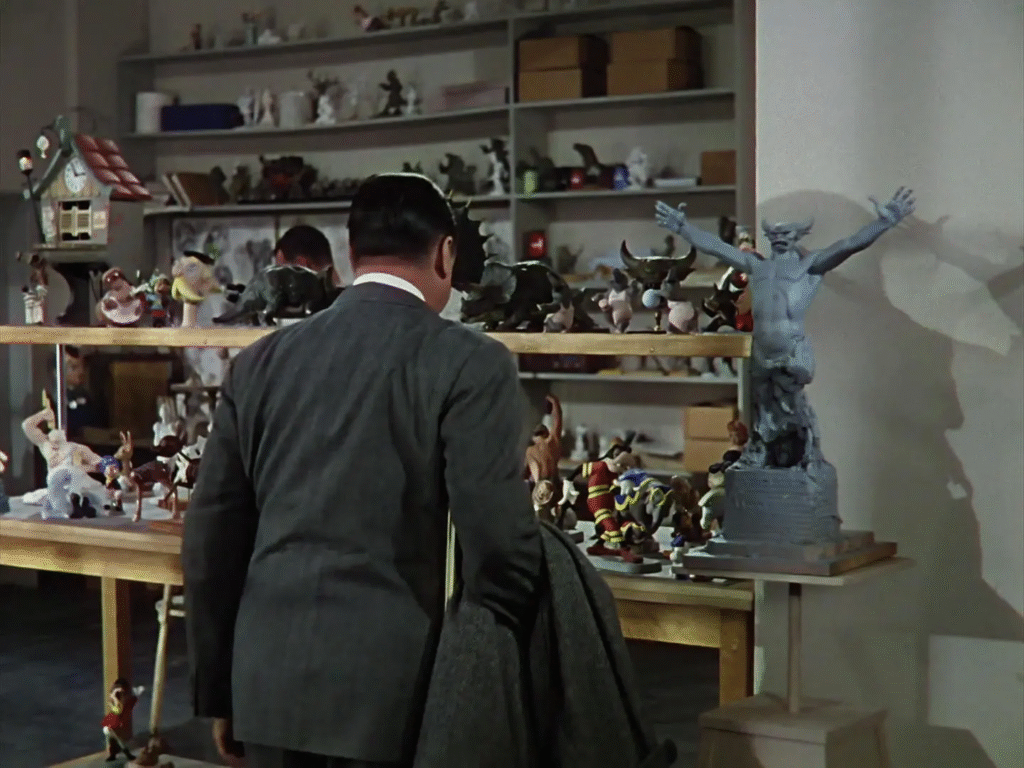
Remember my Animation Station series on what I christened Disney’s Anim-Anthology Movies? Probably not but I really enjoyed writing them. It occurred to me afterwards that The Reluctant Dragon (1941), a Disney movie of a similar vintage, is also a collection of animated shorts. It depicts humorist Robert Benchley going to the Disney studio to pitch The Reluctant Dragon by Kenneth Grahame of Wind in the Willows fame as a cartoon. As he wanders around the studio, he meets various (actors portraying) staff members, learns about the process of animation and sees three cartoons.[16]During this time, the Disney company was going through a bitter animators’ strike, so the portrait painted by the movie is much rosier than real life. I know what you’re thinking. … Continue reading The best of those, by the way, is actually not the titular cartoon but Baby Weems which is about an infant genius who becomes a celebrity to his loving parents’ dismay. None of the three shorts are bad though. I believe I was entirely justified in not including The Reluctant Dragon in my series on Anim-Anthologies since it’s really more a live action movie with a lot of animation than an animated movie with a lot of live action. Also, the series was pretty long as it was for something that didn’t get a lot of positive reader response. Still, The Reluctant Dragon, while no forgotten masterpiece, is a fun little historical curiosity and I’d enjoy recapping it.
So what do you guys think? Are there are any of these ideas you’d like to see me expand into full length blog posts? What about any you think sound terrible and are glad I didn’t make into full length blog posts? I’d love to hear from you.
References
| ↑1 | Partially because we’re both North Dakotans. |
|---|---|
| ↑2 | Indeed, this blog has returned to the 2003 Peter Pan far more often than it has to either the more consistently faithful 1924 one or the more consistently entertaining 2000 one. I guess that’s just the way it is with guilty pleasures. |
| ↑3 | Though a downside of that is that the 1999 movie threatens to drag. |
| ↑4 | He also did the soundtrack for the 2012 Great Expectations by the way. |
| ↑5 | The parallels between the 1999 and 2010 movies are particularly striking. At the beginning of both, Alice is being pressured into doing something at a garden party against her will for the sake of her family and at the end of both, she finds a way to be her own person without letting them down. |
| ↑6 | While the real Andersen was a cobbler-or, more accurately, the son of a cobbler-from Odense, he didn’t get along well with children and was very offended by the design for a statue of himself that portrayed him as reading to children on his knees. |
| ↑7 | Or Ole Lukoie as he’s called in Danish. Maria Tatar’s English translation of Andersen dubs him Ole Shuteye. |
| ↑8 | OK, technically, it’s a three-hour miniseries but on DVD, it plays like a three-hour movie. |
| ↑9 | I’m cynical about the way author biopics always depict their subjects’ famous work as directly inspired by their life experiences. Don’t they think authors ever use their imaginations? But I really like how this plays out in My Life as a Fairy Tale. |
| ↑10 | This is even true of the semi-accurate My Life as a Fairy Tale. |
| ↑11 | Yeah, he’s called by his Roman name while everyone else is called by their Greek name. Deal with it. |
| ↑12 | Part of me wishes McCaughrean had also done one about Jason-which in itself is a tribute to the series’ quality since only a few incidents in his story really capture my imagination. |
| ↑13 | Garfield and Blishen saw themselves as writing for young readers but I’d automatically consider them for young adults at least since while they don’t get graphic whenever sexual assault is a plot point, as it often is in Greek mythology, they don’t try to whitewash it either. |
| ↑14 | Well, truth be told, it’s more of a fairy tale than a myth but who cares? |
| ↑15 | In general, I consider Leon Garfield one of the best prose writers ever. |
| ↑16 | During this time, the Disney company was going through a bitter animators’ strike, so the portrait painted by the movie is much rosier than real life. I know what you’re thinking. Hollywood giving a sanitized portrayal of something? And Disney of all studios? I am shocked, I tell you! Utterly shocked! |
I’d be interested to see you make posts on the Hans Christian Andersen films and “The Reluctant Dragon” (1941). I’d also like to suggest a post on the anime series “Grimm’s Fairy Tale Classics.” It’s an anthology series that adapts various Grimms’ tales (both famous and obscure) and which manages to strike a good balance between being faithful to the source material while also making creative and interpretive liberties. I recommend watching the original Japanese with subtitles, as I find it more mature and subtle than the English dub, but it’s much harder to find. I can send you the original in Japanese with English subtitles if you’re interested.
Oh, and on “Alice in Wonderland” (1999) as well. Forgot to add that.
I’m afraid I rewatched The Reluctant Dragon recently and I’m no longer sure I could write a good blog post about it. I basically enjoyed it, but I couldn’t really think of anything interesting to say about it that I haven’t in this post.
You could send me the Grimms’ Fairy Tale Classics with subtitles, but I can’t promise a blog post about them. I think I can promise one about the 1999 Alice in Wonderland though.
Great. Where and how do I send you the files (and more details on it), since I’m kind of new to using this website? Additionally we can discuss this in private.
You don’t have to bother. I found a way to watch it.